OUR STORY
From Irqah, with you.
A small neighborhood, with people in it. We work with our hands — and we lean on a neighbor before we lean on a market.
- Ethiopia
- Colombia
- Brazil
OUR PHILOSOPHY
Every coffee has its Khalil
We treat every coffee as a companion.
Every coffee has its Khalil, and every Khalil has its companions.We began from a single line: we treat each coffee as a Khalil — a companion with its own character and presence, not a product on a shelf.
And every Khalil, once you know it, has its خِلّان — the companions who gather around it. These coffees are our companions, and we invite you to be one of them.
THE NAME
Who is Khalil?
Khalil is not the name of an owner we hold up; it is a quality we aim for. In our tongue, a khalil is the close companion you trust and settle with — not a passing guest.
That is what we want our coffee to be: a presence you grow used to, not a label that dazzles you and is forgotten. And every خِلّ on the table is a small invitation: sit, taste, then decide — we do not sell a bag before you have had a cup.
THE PLACE
The house in Irqah
Irqah is a small neighborhood in West Riyadh. A street known by its people, not by its shops. We come down to the shop every morning and open the door — and the first sound we hear is not the espresso grinder, but a neighbor saying hello.
When you choose a small place, you choose to know who comes in. We know the names of our first regulars, we know when one of them is running late, and we know when to open early because something is happening on the block.
The house is small: a tasting bar you stand at, and a majlis you sit in while your order is ground and filled. It is not a café where you spend time, but a place where you wait for your coffee the way a guest is waited for — a cup in hand and an unhurried conversation.
The first cup of every morning is poured for whoever walks through the neighborhood door, not for whoever pays the most. The second chair at the table is open for anyone who wants to sit, even for five minutes. We keep a table notebook of customers' notes — not to market them, but because our memory is more honest when it is written down.
SOURCING & ROAST
From green bean to bag
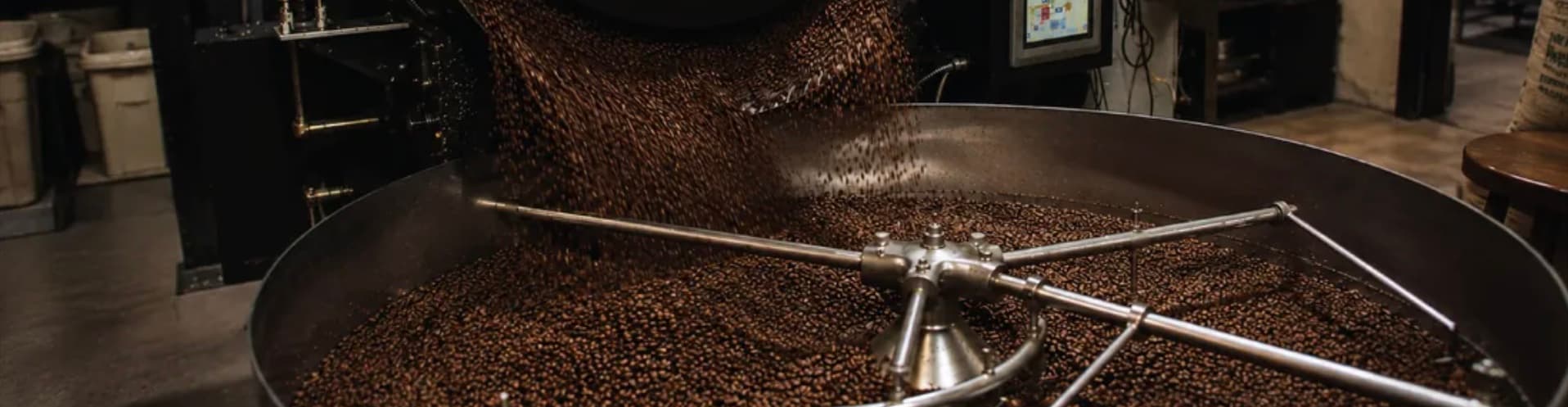
We work from three origins we know: Ethiopia, Colombia, and Brazil. We choose the green beans with the trader before he chooses for us, and we roast them in small batches in Riyadh every week — no stock left to sit on a shelf.
We did not build the shop alone. The baker on the corner prepares the small cakes we serve with the cup. The workshop we pass every Sunday repairs our grinder when it tires. The trader who brings the green beans chooses with us before he chooses for us. This is not a supplier list — it is a working block, and the rule is that everyone earns when one of us earns.
We listen to whoever walks in before we speak. A small question at order time — "How do you usually drink it?" — has taught us more than the books have. The advice comes from the regulars; the recipe comes from us. [PROVISIONAL — this paragraph is ready to host real partner names once Khalil supplies them.]
What we don't do
- We don't roast dark to taste strong.
- We don't blend two origins to mask a fault.
- We don't sell beans older than four weeks from the roast date.
- We don't separate the origin from the name on the bag.
OUR COMPANIONS
And every Khalil has its companions
Thirteen companions on the table, each with its own character — meet them the way you meet a friend.
We know the coffee on this land is not new — it has centuries, it has the dallah and the finjan. We do not lean on that to do what we do, but we do not ignore it either. When you sit at our table, you sit in a small present, behind which stands a long memory we do not claim to own.