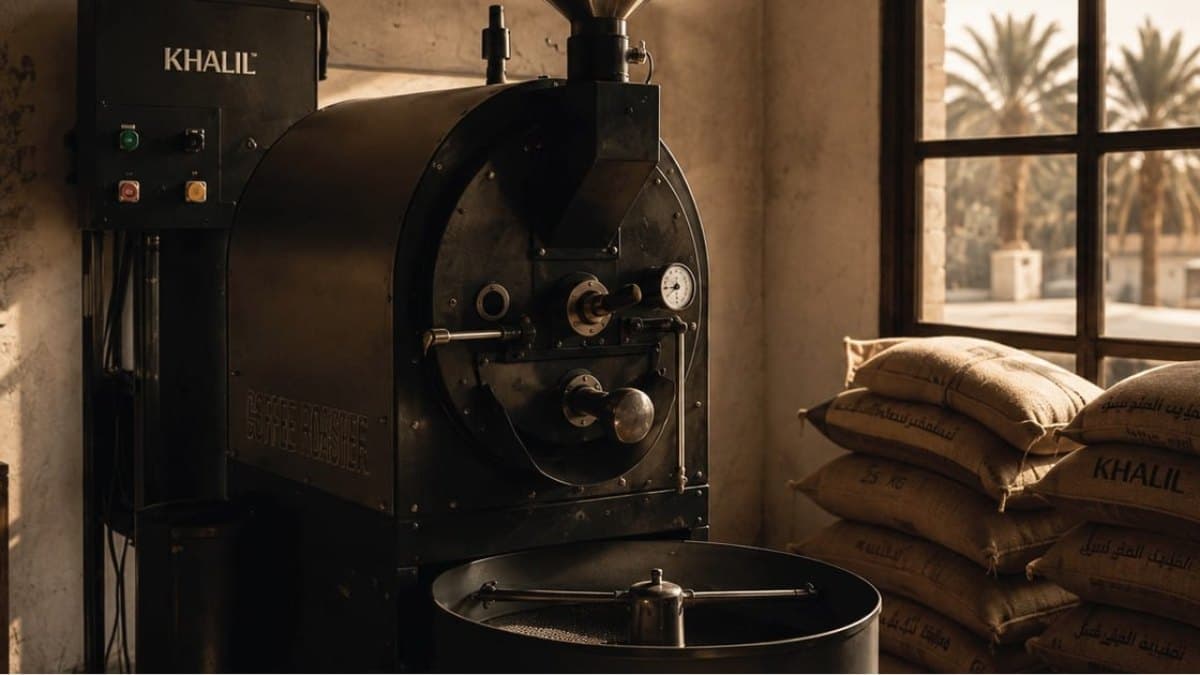
Processing is what happens to a coffee cherry between picking and roasting: how the skin and sweet pulp come off the seed, and how the seed is dried. Here we compare two processing methods represented in Khalil's selection: washed and natural. On the first, the fruit comes off before drying. On the second, the cherry dries whole with the fruit still on it. Anaerobic sits on top of either one: it describes fermentation carried out in a sealed, low oxygen vessel, and it can happen within either method. If you are comparing two bags on a shelf, these words tell you more than the price does.
What processing is, and why it matters on the shelf
Processing is the step a coffee cherry goes through right after picking, before roasting. The difference it makes is easy to taste: two beans from the same region, one taken down the washed route and one dried with the fruit on, tend to taste different. A shopper who reads the bag before buying is looking for this word, more than for the farm name.
The first route: washed
On the washed route the fruit is removed from the bean before drying. The skin and pulp come off first, then the sticky mucilage layer has to go. Wet processing offers two ways to remove it: fermentation in a tank followed by washing, or a demucilaging machine that takes it off without fermentation, a route the literature calls semi-washed. Cups from the washed route tend toward clarity and pronounced acidity. On Khalil's shelf, Colombia Huila is declared washed, and its declared notes are black tea, grapefruit, chocolate, and brown sugar.
The second route: natural
On the natural route the fruit stays on the bean until it dries, and the cup usually comes out heavier and sweeter, with less acidity than washed. Khalil declares two coffees natural: Brazil Mogiana, with declared notes of cacao, chocolate, walnut, and brown sugar, and Uganda Oghavia from the Rwenzori Mountains, with declared notes of dark chocolate, mango, and passion fruit.
The fermentation condition: anaerobic
Anaerobic is not a third method in this comparison. It describes the fermentation itself, carried out in a sealed, low oxygen vessel, and it can be applied within either of them. There is no standardized industry definition for it: vessels range from tanks to barrels to sealed bags, fermentation times vary, and what one producer means by the word another may not. Khalil declares two coffees anaerobic: Yemen Haraz, with declared notes of orange, watermelon, and berries, and Indonesia Maro, with declared notes of blackberry, cherry, and peach.
The "wine" label: Ethiopia Chelchelle
Khalil's Ethiopia Chelchelle page lists the processing as "wine", with tasting notes of blackberry, strawberry and sweetness. The name is borrowed from wine vocabulary rather than from wine itself. What ferments is the sugar in the coffee's own fruit, and the word describes the cup more than the step: ripe berry, obvious sweetness, and the sort of acidity you get from fermented fruit, which is what a long ferment tends to produce. The vocabulary traveled from one trade to the other, and so did some of the methods. Carbonic maceration came out of winemaking. What the word does not carry is a fixed meaning. No agreed protocol and no set fermentation time sit behind it, so one producer's wine lot and another's can be made very differently. The label alone does not establish the fermentation method used, so ask the roastery about this particular lot if you want the detail.
How to choose among the six, now that you know the difference
Choose by the declared notes rather than by the processing word alone. If you want a clean cup with some brightness, start with Colombia Huila and its black tea and grapefruit. For something heavier and sweeter, Brazil Mogiana leans cacao and walnut, while Uganda Oghavia brings dark chocolate with mango and passion fruit. The two anaerobic lots read fruitier: orange and watermelon on Yemen Haraz, blackberry and cherry on Indonesia Maro. Ethiopia Chelchelle is the one to reach for if strawberry and sweetness sound right. A fuller look at each bean's origin lives on the origins page, and brewing notes for each process live in the brew guides.
The easiest way to match your taste to the right bag is a tasting session where you try several coffees at once, or order one single-origin bag and work through it at home. Browse Khalil's coffees and start with what sounds closest to your taste today. You can always try another next week.
Frequently asked questions
What is natural process coffee?
Natural process coffee dries with its fruit still attached rather than having it removed first. Cups from this route tend to read heavier and sweeter, with lower acidity than washed coffee.
How does natural process coffee differ from washed?
Washed coffee has the fruit removed from the bean before drying, and tends toward clarity and pronounced acidity. Natural coffee keeps the fruit on through drying, and tends toward weight and sweetness.
Which Khalil coffees are natural process?
Brazil Mogiana and Uganda Oghavia are both declared natural. Mogiana lists cacao, chocolate, walnut, and brown sugar. Oghavia lists dark chocolate, mango, and passion fruit.
Who should choose natural process coffee?
It suits anyone who leans toward a heavier, sweeter cup with lower acidity. Among Khalil's declared naturals, Mogiana lists cacao and walnut, while Oghavia lists dark chocolate with mango and passion fruit.